The Syncwire iPhone Car Charger review centers on a simple convenience: a built-in Lightning cable for an iPhone plus a separate USB port for another device.
Its coiled lead and compatibility with 12–24V vehicle inputs make it worth considering for drivers who want fewer loose cables in the cabin.
Syncwire Charger Review Summary
The quick verdict
13,000+ ratings
Read Amazon ReviewsSyncwire iPhone Car Charger
A practical fit for iPhone drivers who want a built-in Lightning cable and a second USB port without carrying extra cables.
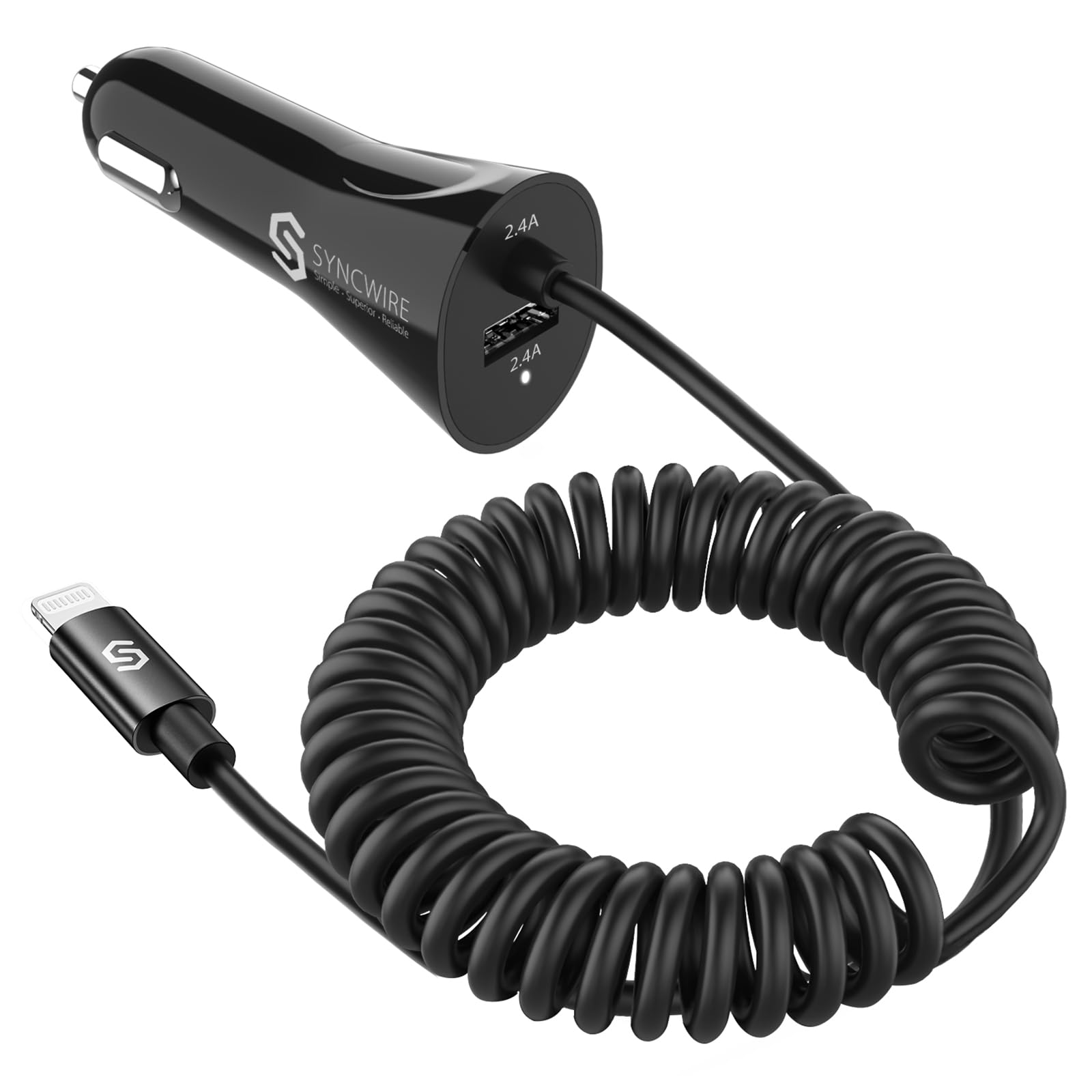
- Built-in coiled Lightning cable with an approximately 1.3-foot natural reach and extension up to 5 feet when pulled.
- Additional USB port for a second USB-powered device.
- Up to 4.8A combined output when charging two devices simultaneously, with output adapted between them.
- Designed for a range of listed iPhone, iPad, and iPod models with Lightning connections.

Pros
- Combines a permanently attached Lightning cable and a second USB port in one vehicle adapter.
- The coiled cable can extend for use and return to a shorter natural length when not pulled.
Consider before buying
- The built-in lead is Lightning, so it may not suit a household that has moved to USB-C-only phones.
- The total output is shared across two connected devices, so buyers needing higher individual charging output should check whether this arrangement fits their devices and routine.
Read the full review summary
Syncwire combines a Lightning lead with an additional USB port, allowing two devices to charge at once with up to 4.8A of combined output.
The built-in cable is normally about 1.3 feet long and can extend to 5 feet when pulled, giving it room to reach a phone without leaving a separate cable draped across the console.
This design is most useful for drivers with compatible Lightning-equipped Apple devices who also want to charge a passenger’s phone or another USB-powered gadget.
The main tradeoff is its fixed Lightning connection: buyers who use newer USB-C-only devices, need more than two charging connections, or want a retractable USB-C setup should check those requirements before choosing.
The buying factors
Syncwire Charger Scorecard
Editorial scores reflect listed features and buyer fit; they are not laboratory measurements or customer ratings.
Two-device charging
A built-in Lightning cable and a separate USB port support charging two devices together, with up to 4.8A combined output.
Cable convenience
The coiled Lightning lead stays attached to the charger and extends when needed, reducing the need to keep a separate cable in the car.
Reach flexibility
The lead extends to 5 feet when pulled, though its natural length is about 1.3 feet and the practical reach depends on the outlet and phone position.
Device compatibility
The fixed lead supports a broad range of listed Lightning-equipped Apple devices, while the extra USB port can serve other USB-powered devices.
Vehicle compatibility
The 12–24V input range is intended for a variety of vehicle models.
Design safeguards
The design includes a smart IC and thermal material intended to address heat, overload, and device overcharge concerns; these are design features, not a measure of real-world performance.
Key Features and Specifications of Syncwire Charger
- Built-in coiled Lightning cable with an approximately 1.3-foot natural reach and extension up to 5 feet when pulled.
- Additional USB port for a second USB-powered device.
- Up to 4.8A combined output when charging two devices simultaneously, with output adapted between them.
- Designed for a range of listed iPhone, iPad, and iPod models with Lightning connections.
- 12–24V DC vehicle input compatibility.
- Polycarbonate shell, smart IC, thermal material design, and white LED charging indicator.
Pros and Cons of Syncwire Charger
Pros
- Combines a permanently attached Lightning cable and a second USB port in one vehicle adapter.
- The coiled cable can extend for use and return to a shorter natural length when not pulled.
- The extra USB port can charge a range of USB-powered devices.
- Its stated vehicle input range covers 12–24V systems.
Consider before buying
- The built-in lead is Lightning, so it may not suit a household that has moved to USB-C-only phones.
- The total output is shared across two connected devices, so buyers needing higher individual charging output should check whether this arrangement fits their devices and routine.
- The lead’s reach varies from about 1.3 feet naturally to up to 5 feet when extended; check the distance from your vehicle outlet to your usual phone position.
Who Should Buy Syncwire Charger?
Good fit
Consider the Syncwire if you regularly charge a Lightning-equipped iPhone in the car and want the charging cable already attached.
The coiled design gives you some reach when the phone is mounted or held farther from the outlet, then avoids leaving a full-length loose cable across the cabin when it is not needed.
The second USB port adds useful flexibility for a passenger’s device or another USB-powered accessory. With up to 4.8A shared between the two connections, it is a straightforward setup for routine top-ups rather than a multi-device charging hub.
Before buying, confirm that your phone uses Lightning and that the charger’s natural cable reach or extended length will work with your outlet placement.
Also consider whether two charging connections and the shared output are enough for your trips.
Who should skip it
Skip this design if your primary phone relies on USB-C and you do not want to supply a separate cable for it.
The built-in lead is Lightning, while the extra USB port requires the appropriate cable for devices that use it.
Look elsewhere if you need to charge several devices at once or want a charger built around a different cable arrangement. Syncwire offers two charging connections, with one permanently configured as Lightning.
How the Syncwire Charger Fits Everyday Driving
A built-in cable that changes the routine
The main convenience is having a Lightning lead ready at the outlet.
That can simplify everyday charging for a compatible iPhone: plug it in without retrieving a separate cable, then let the coiled lead sit closer to the charger when the phone is not in use.
Since its normal reach is about 1.3 feet, drivers should check the outlet-to-phone distance; the lead can extend to 5 feet when pulled for a more distant position.
A second port for shared trips
The additional USB port makes the adapter more useful when a passenger also needs power or another USB-powered device is along for the ride.
Both connections can be used at once, with up to 4.8A of combined output and automatic output adaptation.
That gives the setup flexibility for two devices, while the combined limit is a consideration for drivers expecting each device to receive the maximum available output independently.
Compatibility is the key buying check
The fixed cable is designed for the listed Lightning-equipped Apple models, including iPhone, iPad, and iPod devices. The separate USB port broadens its use to other USB-powered equipment, but those devices need a suitable cable.
If your regular phone has a different connector, check what you would need to connect it before relying on this as your primary car charger.
Vehicle and protective design details
The charger is intended for vehicle inputs from 12 to 24 volts, a range that supports use across different vehicle types.
Its polycarbonate shell, smart IC, and thermal material design are presented as features intended to address heat, overload, and device overcharge, while a white LED indicates charging readiness.
These design details may be reassuring to buyers, but they do not replace checking the fit and charging needs of the devices used in the car.
Alternatives to Syncwire Charger
Cell Phone Automobile Chargers alternative
25,000+ ratings
Read Amazon ReviewsLISEN Retractable Car Charger 4 in 1
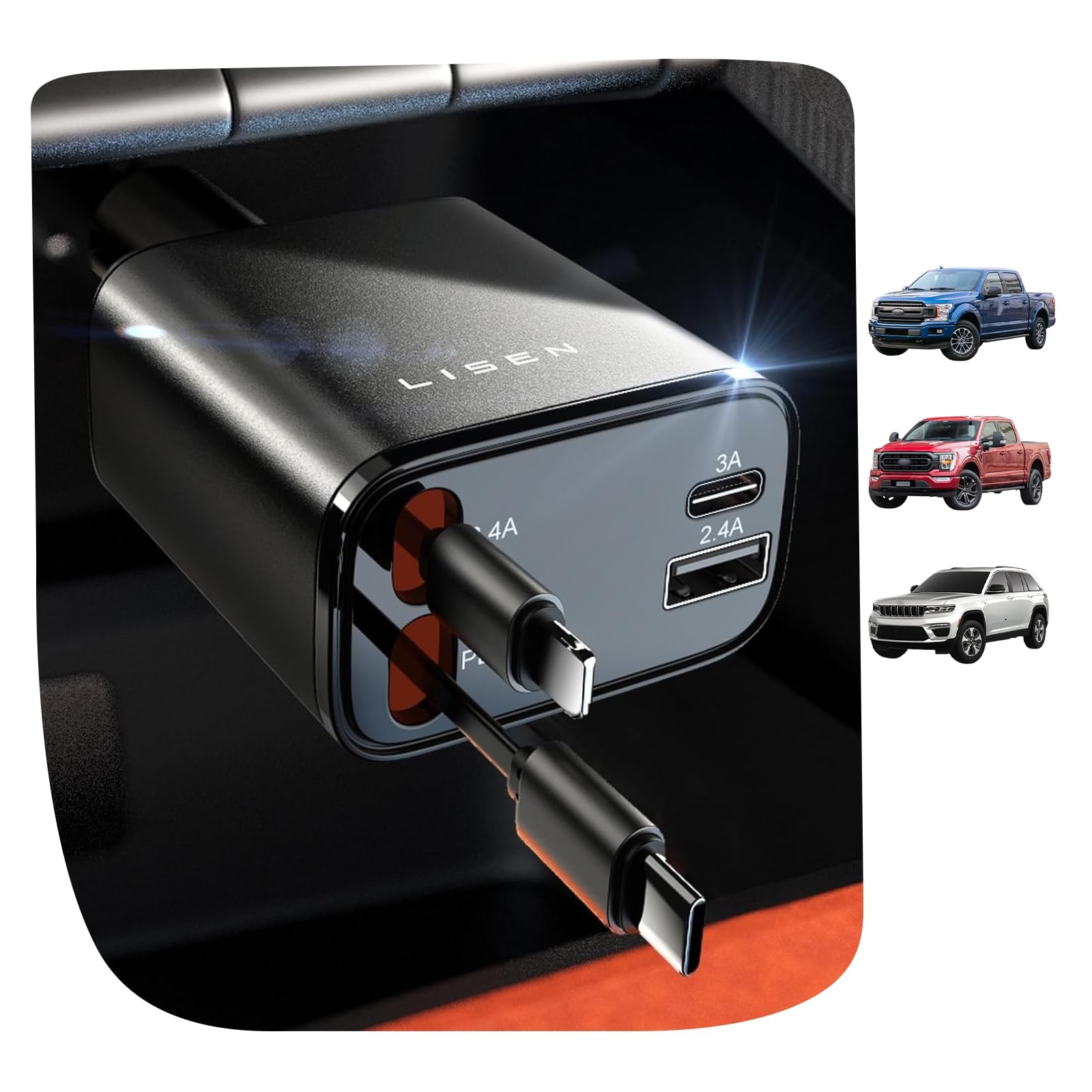
Choose Syncwire if a built-in Lightning lead and simpler two-device arrangement match your routine. The LISEN may suit drivers who want more charging connections and a retractable cable, especially if USB-C PD is a priority.
- The LISEN has a retractable cable, dual USB ports, and a design described as able to charge up to four devices simultaneously; its description highlights USB-C PD charging.
- The Syncwire combines a built-in Lightning cable with one USB port and supports up to two devices at once.
Cell Phone Automobile Chargers alternative
25,000+ ratings
Read Amazon ReviewsLISEN 4 in 1 Starlight Retractable Car Charger
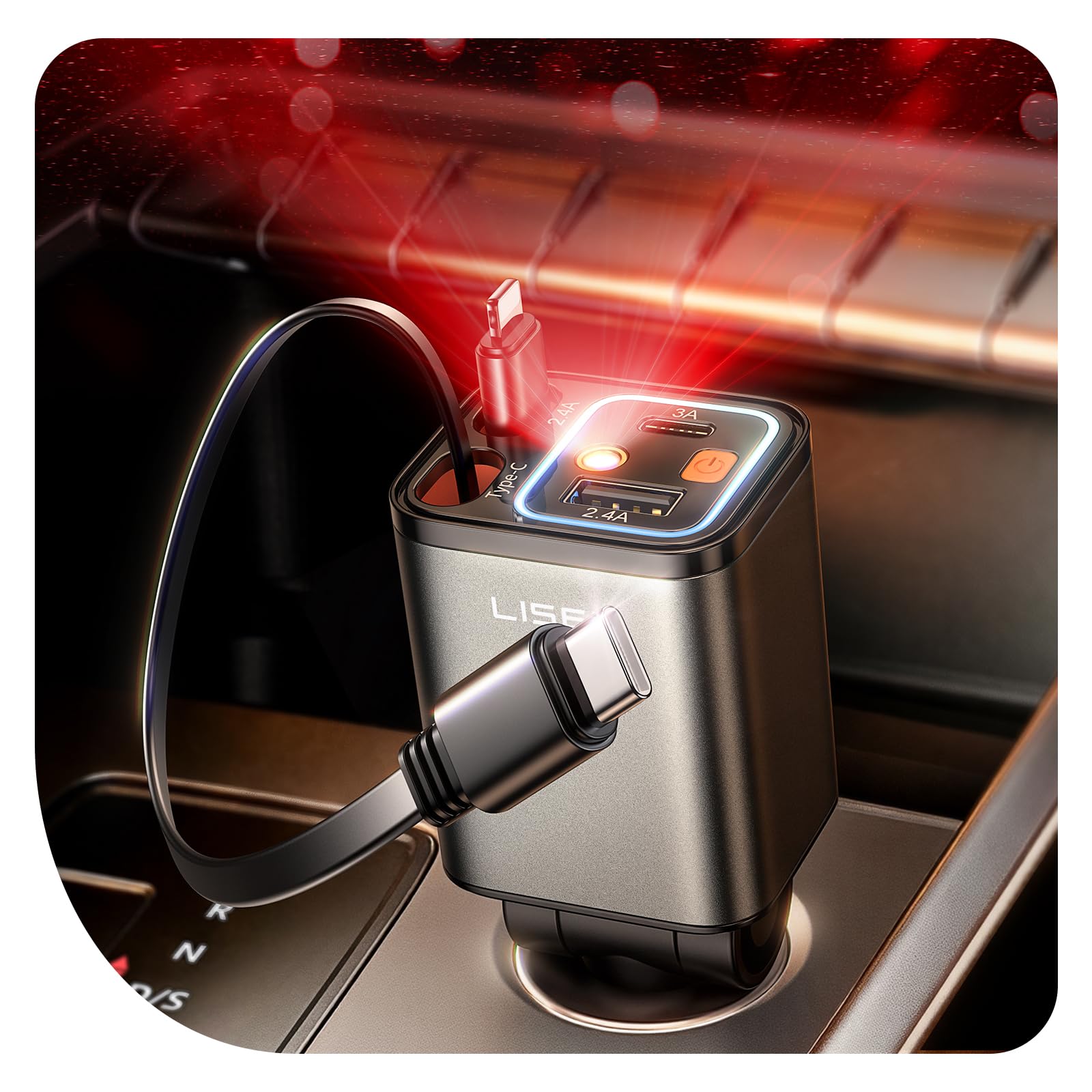
Syncwire is the more focused option for a Lightning-equipped iPhone and a second device. Consider the LISEN if you need a USB-C-oriented, higher-output multi-device setup and want its additional ambient-light feature.
- The LISEN combines a retractable Type-C cable, a USB-C port, a USB-A port, up to 75W total output, and a starlight projector; it supports charging up to four gadgets simultaneously.
- Syncwire’s distinguishing setup is its built-in Lightning lead alongside one USB port, with up to 4.8A combined output.
Is Syncwire Charger Worth It?
The Syncwire iPhone Car Charger is worth considering if you want a built-in Lightning cable, a second USB port, and a compact way to handle two devices during everyday drives.
Its coiled lead offers useful reach without requiring a separate Lightning cable in the car.
Check connector fit, cable reach, and the shared output against your routine before choosing. Drivers who primarily use USB-C devices or need more than two charging connections will likely be better served by a different design.
Your review at a glance
13,000+ ratings
Read Amazon ReviewsSyncwire iPhone Car Charger
A practical fit for iPhone drivers who want a built-in Lightning cable and a second USB port without carrying extra cables.
- Built-in coiled Lightning cable with an approximately 1.3-foot natural reach and extension up to 5 feet when pulled.
- Additional USB port for a second USB-powered device.
- Up to 4.8A combined output when charging two devices simultaneously, with output adapted between them.
- Designed for a range of listed iPhone, iPad, and iPod models with Lightning connections.